
Signing a new resident feels like a win, and it is. But the lease that does the most for a community's performance is often the second one: the renewal. When a resident decides to stay another year, the property avoids a long list of costs and keeps something harder to replace, a neighbor who already calls the place home.
For onsite teams, retention is not a single program. It is the result of hundreds of small moments over the course of a lease. For owners and investors, it is one of the most direct levers on net operating income.
What turnover really costs
When a resident moves out, the cost goes well beyond one empty month. A typical turn includes:
- Vacancy loss. Rent that is not collected while the unit sits empty.
- Make-ready. Paint, cleaning, flooring, repairs, and appliance work to bring the unit back to market condition.
- Marketing and leasing time. Advertising, tours, applications, and screening.
- Concessions. Specials that may be needed to attract a new resident, especially in competitive submarkets.
As a simple illustration, on a unit renting for $1,500 a month, a month of vacancy plus make-ready, marketing, and a modest concession can easily add up to $3,000 to $4,500 for a single turn. A renewal, even with a small rent adjustment, avoids nearly all of it.
Why it shows up in value, not just expenses
Because multifamily properties are valued on their income, savings at the unit level carry through to the value of the whole asset. Here is an illustrative example:
- A 300-unit community improves retention enough to avoid 15 move-outs in a year
- At roughly $3,500 per avoided turn, that is about $52,500 in additional net operating income
- At a 5.5 percent cap rate, that income supports close to $950,000 in property value
The numbers will be different at every property, but the principle holds. Retention is not a soft metric. It is one of the clearest ways a management team creates value for owners.
What actually moves residents to renew
Residents rarely renew because of a single amenity or a single phone call. They renew because living there has been easy and pleasant. In our experience, a few drivers matter most:
- Service response. Maintenance requests handled quickly and done right the first time. Nothing builds or erodes trust faster.
- Communication. Residents want to know what is happening, from planned water shutoffs to pool repairs. Clear, early notice goes a long way.
- Community feel. Knowing neighbors and the onsite team by name makes a property feel like home rather than a place to sleep.
- Amenity upkeep. A clean fitness center, a working pool, and well-kept grounds signal that the property is cared for.
- A fair renewal. A thoughtful, well-timed renewal offer, explained clearly, rather than a surprise letter at the last minute.

The renewal starts on move-in day
The decision to renew is usually made long before the renewal letter goes out. It starts with the move-in experience: a clean, ready unit, a friendly welcome, and a quick fix if something is not right in the first week. First impressions set the tone for the whole lease.
From there, onsite teams look for chances to show residents they are paying attention:
- Following up after work orders to make sure the issue was resolved
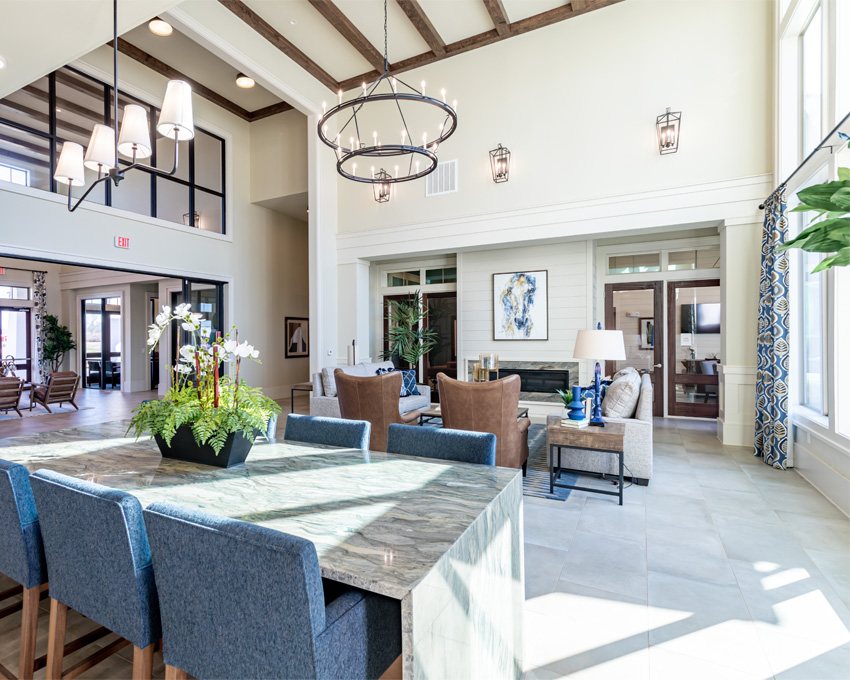
- Hosting resident events, from holiday gatherings to coffee mornings in the clubhouse
- Responding to online reviews and resident feedback, good and bad
- Keeping amenities clean, working, and ready to use
- Starting renewal conversations early, often 90 to 120 days before lease end, so there is time to talk
Listening when residents leave
Not every move-out can be prevented. People buy homes, change jobs, and relocate for family. But the reasons residents leave are some of the most useful information a team can collect. If move-out surveys keep pointing to slow maintenance, parking, or noise, those are problems worth solving for the residents who are still there.
What owners and investors can watch
For anyone evaluating how a property is managed, a few metrics say a lot about retention:
- Renewal rate, or the share of expiring leases that renew
- Average days a unit sits vacant between residents
- Average time to complete maintenance requests
- Online review trends and resident satisfaction feedback
- The most common reasons residents give for moving out
These numbers tend to move together. A team that responds quickly and treats residents well usually sees it in renewals first and in NOI soon after.
It is the same ownership-minded approach we described in the first 90 days after acquisition: take care of the property, take care of the people who live there, and performance follows.
Looking for ownership-minded management?
See how Cypressbrook Management helps multifamily communities keep residents happy, protect value, and grow net operating income.
View ManagementThis article is for informational purposes only and reflects general management perspectives. Dollar figures and cap rates are illustrative examples only and do not represent the results of any specific property. Practices and results vary by property, market, and business plan. Past performance of any asset or strategy does not guarantee future results.